Weathering Steel (A588, Corten) for Outdoor Equipment Frames
Equipment that sits outdoors for 25 years has a coating problem. Paint chips, edges rust first and repainting a large frame in the field costs more each time. Weathering steel offers a different approach: a steel that forms its own protective rust layer, and does not need paint in the right environment.
It is not a magic material. In the wrong place it corrodes as fast as ordinary carbon steel, and in the wrong detail it stains everything below it. This guide explains how weathering steel works, where it fits outdoor equipment frames and what a buyer should specify when ordering a fabricated structure in A588 or an equivalent grade.
What weathering steel is
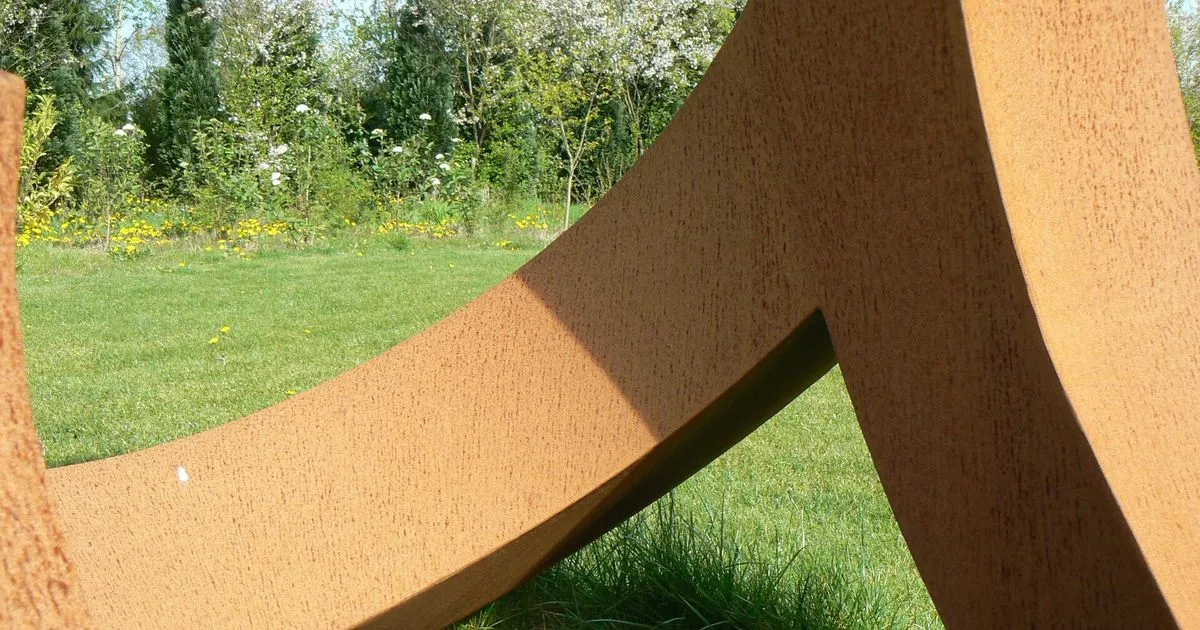
Weathering steel is a low-alloy structural steel with small additions of copper, chromium, nickel and phosphorus. Exposed to air, it rusts like any steel. The difference is what the rust does. Instead of flaking away and exposing fresh metal, the rust on weathering steel forms a dense, adherent layer that slows further corrosion. The surface turns from orange to a stable dark brown over the first few years.
Common grades by standard:
| Standard | Grade | Typical minimum yield | Note |
|---|---|---|---|
| ASTM A588 | Grade A, B and others | About 345 MPa (50 ksi) | Common US structural weathering grade |
| ASTM A709 | Grade 50W | About 345 MPa | Bridge grade, similar chemistry to A588 |
| EN 10025-5 | S355J0W, S355J2W, S355K2W | 355 MPa | European weathering structural grades, W for weathering |
| Trade name | Cor-Ten A and B | Per original specification | Brand name, often used generically |
ASTM A588 itself states that its atmospheric corrosion resistance is roughly four times that of plain carbon structural steel. Treat that as a ballpark under suitable conditions, not as a guarantee. Weathering steel is also stronger than A36, so a design can sometimes use thinner sections, which saves weight and welding.
Why a patina forms and what it needs
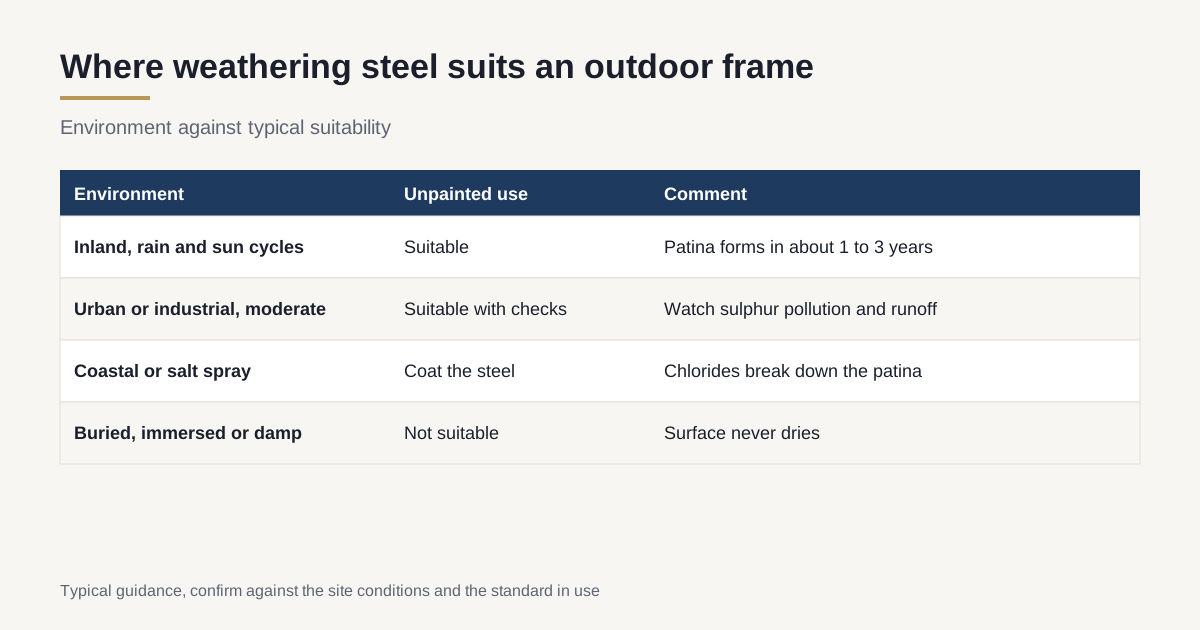
The protective layer forms through repeated wetting and drying. Rain or dew wets the surface, then sun and wind dry it. Over many cycles, a fine oxide layer builds up and seals the surface. Typical stabilisation takes from about one to three years, and sometimes longer in sheltered or dry areas.
Two conditions block this process:
- Constant wetness. If water sits on the steel and never dries, the rust stays loose and porous. Pockets, flat horizontal faces with no drainage and details that trap leaves or dirt are all problems.
- Chlorides and aggressive air. Salt from the sea or from de-icing, and heavy industrial pollution such as sulphur compounds, break down the patina. Frames near the coast or on a marine deck can corrode almost as fast as plain carbon steel.
Once stable, a good patina typically corrodes at a rate often under 0.01 mm per year. A badly performing surface can lose several times that.
Where it suits outdoor equipment
Weathering steel is a good choice for frames and structures that are:
- Fully exposed to rain and sun, with good drainage.
- In inland, temperate or dry climates.
- Hard to repaint, such as long conveyor galleries, remote skids and tall frames.
- Intended for a long service life, where lifecycle cost matters more than first cost.
Typical uses include conveyor support frames, mining and quarry structures, large equipment bases outdoors, shipping and storage frames and architectural features.
Where it should not be used
- Within a few kilometres of the sea or in spray zones, unless a coating is applied. Many bridge specifications limit unpainted use close to coasts.
- Buried or immersed steel. Soil and standing water keep the surface wet.
- Indoors or under cover where it stays damp. A frame under a roof that never gets wet and dry cycles may stay a dull orange and never stabilise.
- Where rust staining is unacceptable. During the first years, rust runoff stains concrete, paving and nearby paintwork. Foundations and neighbouring surfaces need protection or drainage.
- Heavy chemical or process exposure with acid or salt fallout.
For environments in between, a coating system over weathering steel is a legitimate choice. The coating guidance in the article on surface finish systems for structural steel applies, with one point to note: galvanising weathering steel is possible but loses its main advantage, and paint on weathering steel still needs correct surface preparation.
Design details that decide the outcome
A sound frame design avoids water traps. Check these on the drawing:
- Drainage holes at the low point of hollow sections and box members.
- No flat ledges that hold water, or a slight slope on horizontal faces.
- Sealed or fully welded joints at crevices. Water held between two plates keeps corroding and swells the joint.
- Open sections preferred over closed ones where possible. If a closed section is needed, seal it fully or provide ventilation and drainage.
- Gaps between steel and other materials so that soil, concrete and timber do not hold moisture against the steel.
- Corrosion allowance where the design calls for it. Some designers add 1 to 2 mm thickness to compensate for the slow metal loss.
Welding weathering steel
Weathering steel welds like other HSLA steels, with a few extra steps. Preheat follows the same logic as other structural steels. See the article on preheat and interpass temperature for how thickness and carbon equivalent set the minimum.
The point specific to weathering steel is the filler metal. Welds on exposed surfaces should use a weathering-type filler, with similar copper, nickel and chromium content, so the weld develops the same patina as the plate. A plain carbon filler leaves a weld that corrodes faster than its surroundings and shows as a dark line. AWS D1.1 includes filler metal requirements for unpainted, exposed welds on weathering steel. Ask the shop which consumables it plans to use, and check them against the welding procedure.
Bolts for weathering steel frames
Bolted connections in unpainted weathering steel use weathering bolts, such as ASTM A325 Type 3, which have the same corrosion-resistant chemistry as the plate. Standard galvanised or plain bolts corrode differently from the plate and can leave rust stains and loose joints. Ordinary bolt classes are compared in the article on A325 versus A490 and grade 10.9 structural bolts.
Surface preparation before exposure
New steel arrives with mill scale. Mill scale is a hard blue-grey oxide skin that does not behave like a patina. Left on, it flakes away unevenly and gives patchy rust. For a uniform, attractive and well-performing surface, the usual practice is to blast clean the steel to remove scale before the frame goes outside, often to a commercial blast standard. Oil, grease and weld spatter should also be removed, since they leave streaks.
Some buyers specify blasting for the first appearance. Others accept the weathering process on mill-scaled steel, with a longer and less even stabilisation. State the requirement on the drawing.
What to ask for on the order and the certificate
- Grade and standard, such as ASTM A588 Grade B or EN 10025-5 S355J2W, not just “Corten”.
- Mill certificates showing chemical composition. Weathering behaviour depends on copper, chromium, nickel and phosphorus. A corrosion resistance index of 6.0 or more, calculated under ASTM G101, is a commonly used benchmark. Check which method applies to your specification.
- Weathering filler metal for exposed welds, and weathering bolts where the frame is bolted.
- Surface condition, such as blast cleaned to a stated standard.
- Drainage and detail requirements, shown on the drawing.
- Handling rules: no contact with carbon steel dust, which can leave rust spots, and no marking with paint that will stain.
Plate in weathering grades is stocked less widely than A36 or S355, so ask early about availability and lead time for the thicknesses you need. See the guidance on steel grades for heavy weldments for how plate sourcing and certificates fit together.
Transport and storage
Steel that is stored wet and stacked tightly can form uneven stains and sometimes hold moisture in contact areas. During shipping, wrap or separate stacked members so air can circulate, and avoid stacking with wet packers. Ocean transit in humid conditions can trigger early surface rust, which is expected, but crevice staining between stacked parts is not. Shipping and preservation planning is covered in the article on out-of-gauge breakbulk shipping.
Closing checklist
- Site environment checked for chlorides, constant wetness and runoff limits.
- Grade and standard named, with mill certificate review.
- Weathering filler and bolts specified.
- Drainage, crevices and water traps removed from the design.
- Blast cleaning requirement stated.
- Staining runoff managed at the foundation and nearby surfaces.
If you have an outdoor frame and are weighing weathering steel against paint or galvanising, send the drawing with the site conditions. We reply within 24 business hours with a view on the options and the shops that can source the plate.
See also: the structural steel grades hub for weathering grades next to the other frame steels.